
Conference Details
The conference will open at 1:00 on Friday 30 October 2026 and conclude at noon on Sunday 1 November 2026.
Conference Venue

The conference talks will be held in the LITE Center building. LITE stands for Louisiana Immersive Technologies Enterprise. LITE is the home for innovation and technology-based business development in Louisiana. The LITE Center is located in the UL Lafayette Research Park. Visit the LITE web page to learn more (opens in a new window.)
Important Dates
Details regarding registration, financial assistance, and cancelation policies are posted on the actions page.
Registration
- Early registration (before 1 September 2026): $350
- Registration (on or after 1 September 2026): $400
- Early student registration (before 1 September 2026): $150
- Student registration (on or after 1 September 2026): $175
- Developing country or “in need” individual registration: $200
- Fully retired individual registration: $150
The Developing country or “in need” individual registration category was added on Sunday 30 August 2026 and will be available as an option on the registration site later in the day on Monday 31 August 2026. If you have questions about eligibility for this registration category, please use this email link to submit your question.
Financial Assistance
We are pleased to be able to provide partial support to deserving students, postdoc holders, and early career PhD holders. The basic eligibility requirements are:
- You must be a student (undergraduate or graduate), a postdoc holder, or an early career PhD (≤ 2 years).
- You must register for and present a talk at the conference.
If your application is approved, we will cover your registration fee. And, subject to funding constraints, we will provide partial lodging support as well.
If you meet these requirements, please submit your abstract, register for the conference, and complete the Financial Assistance Form. Follow this link to the Actions page to complete these tasks.
Submissions
- Submissions are no longer being accepted.
Cancelation
- Full refund of registration fees (request must be received before 1 September 2026)
- Fifty percent refund of registration fees (request must be received before 1 October 2026)
- No refunds for requests received on or after 1 October 2026
Papers
Sessions
Our plans allow for two types of sessions: Contributed Sessions and Invited Speaker Sessions.
Contributed Sessions
Contributed paper sessions are organized as follows. Five participants, each allotted 20 minutes for presentation and questions, will be grouped by the AISC Program Committee.
Invited Sessions
Invited sessions on special topics will typically have four or five speakers and may include a discussion period.
Schedule (preliminary - watch for updates)
Follow this link to view the preliminary schedule.
The preliminary schedule (30 September 2026) is now posted. Please check back for updates.
Committees
International Advisory Committee
Our conference Organizing Committee will take advantage of the invaluable guidance provided by the esteemed members of our International Advisory Committee.
Open this tab to view the Advisory Committee member list.
- S. Ejaz Ahmed
Brock University, Ontario, Canada - Subhash Bagui
University of West Florida - Rishi Chakraborty
Duke University - N. Balakrishnan
McMaster University, Ontario, Canada - Nedret Bellor
Auburn University - Frank Coolen
Durham University, United Kingdom - Asim Dey
Texas Tech University - B. K. Dass
University of Delhi, India - Sujit Ghosh
North Carolina State University - Shamal C. Karmaker
International Institute for Carbon-Neutral Energy Research (WPI-I2CNER) - Kalimuthu Krishnamoorthy
University of Louisiana at Lafayette - Victor Patrangenaru
Florida State University - Prakash Patil
Mississippi State University - Tapan Roy
Rajshahi University, Bangladesh - Samiran Sinha
Texas A&M University - Javid Shabbir
Quaid-I-Azam University, Islamabad, Pakistan - Bill Woodall
Virginia Tech
Organizing Committee
Open this tab to view the Organizing Committee member list.
- Kumer Das
Professor and Interim Vice President for Research
University of Louisiana at Lafayette - Calvin Berry
Associate Professor
University of Louisiana at Lafayette - Kalimuthu Krishnamoorthy
Professor
University of Louisiana at Lafayette - Nabendu Pal
Professor
University of Louisiana at Lafayette - Yongli Sang
Associate Professor
University of Louisiana at Lafayette - Mo Li
Assistant Professor
University of Louisiana at Lafayette - Sat Gupta
Professor Emeritus (Statistics)
University of North Carolina, Greensboro - Asim Dey
Assistant Professor
Texas Tech University - Mithun Acharjee
Assistant Professor
University of Southern Mississippi
Additional details are coming soon! Please check back for updates.
Plenary Speakers
Katherine Bennett Ensor
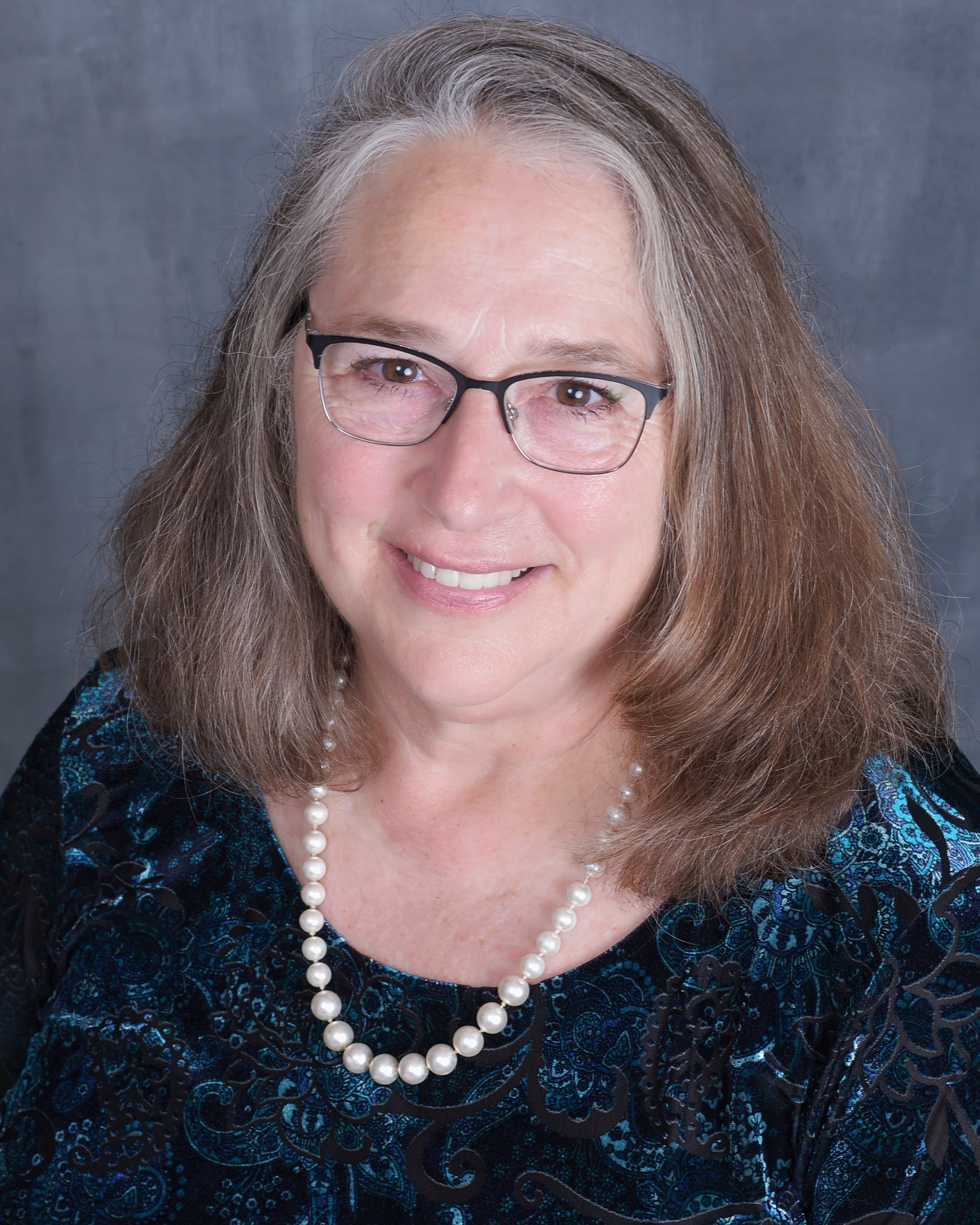
Professor, Rice University
Frontiers of Statistics in Science and Engineering: 2035 and Beyond National Academies of Science, Engineering and Medicine Consensus Study
About the Speaker
Open this tab for some information about the speaker.
Dr. Katherine Bennett Ensor is the Noah G. Harding Professor of Statistics at Rice University where she serves as director of the Center for Computational Finance and Economic Systems. Ensor, a leading national voice in artificial intelligence and data science, develops statistical methods for practical problems with specific interests in finance, energy, environment, health, community and risk analytics. Ensor served as the 117th president of the American Statistical Association and is a fellow of ASA, AAAS, and an elected member of ISI. She has been recognized for her leadership, scholarship, and mentoring and, in 2021, was inducted to the Texas A&M College of Science Academy of Distinguished Former Students. In 2024 she was honored with the ASA Founder’s Award, the highest honor given by ASA to its members. She holds a Ph.D. in Statistics from Texas A&M University, and an M.S. and B.S.E. in Mathematics from Arkansas State University.
Visit Katherine Ensor's Rice University webpage to learn more (opens in a new window.)
John Stufken
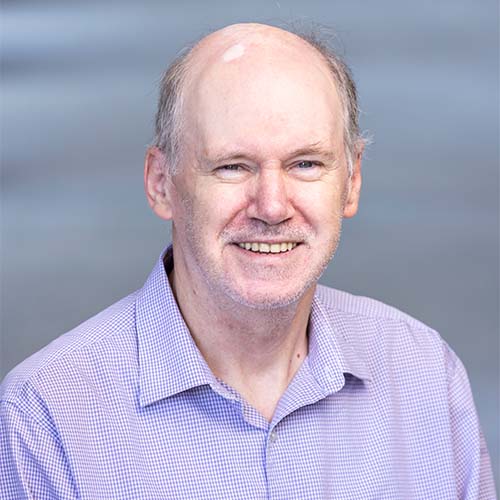
Professor, George Mason University
Data Subsampling Strategies
Subsampling from large datasets has attracted growing attention over the past decade in both the computer science and statistics literature, leading to the development of a wide range of methods. After a brief high-level overview, this presentation will examine two representative approaches in greater detail: one model-based and one model-free. The model-based method is designed to achieve efficient estimation of model parameters, whereas the model-free approach emphasizes accurate prediction of future observations.
About the Speaker
Open this tab for some information about the speaker.
John Stufken is an expert in experimental design and data science, known for his work on orthogonal arrays, crossover designs, and optimal design methods. He has authored influential books and held leadership roles at major universities and the NSF. Stufken is an Elected Fellow of the American Statistical Association and the Institute of Mathematical Statistics.
Visit John Stufkin's webpage to learn more (opens in a new window.)
Karen Kafadar

Commonwealth Professor, University of Virginia
Real-world Impacts from Statistical Research in Industry, Government, and Academe
Advances in statistics arise often, though not exclusively, through academic research. The problems that motivate these advances can come from researchers in other university departments as well as in industry, government, and public health. In this talk, I will briefly describe research that arose from projects at Hewlett-Packard, National Cancer Institute, and UVA's Dept of Neurophysiology. These examples demonstrate that research in statistics can arise unexpectedly in many scientific disciplines and require theoretical results across the spectrum of statistics to solve real-world problems.
About the Speaker
Open this tab for some information about the speaker.
Professor Kafadar is a leading expert in exploratory data analysis and robust methods. Her research focuses on uncertainty characterization in physical and biological sciences, earning awards from the CDC, ASA, and American Society for Quality. She served as the 114th president of the American Statistical Association and was elected an ASA Founder for her outstanding leadership. She also served as president of the International Association for Statistical Computing.
Hiya Banerjee

Senior Director, Eli Lilly and Company
The Future of Drug Development: AI as a Strategic Enabler
About the Speaker
Open this tab for some information about the speaker.
Dr. Hiya Banerjee is a Senior Director at Eli Lilly and Company, where she focuses on external engagement, statistical innovation, and implementation in clinical drug development. She has extensive experience in cardiometabolic diseases and oncology, with expertise in survival analysis, causal inference, missing data methodologies, and real-world evidence. Dr. Banerjee is actively involved in advancing statistical collaborations across academia, industry, and regulatory agencies. She serves in leadership roles within the American Statistical Association Biopharmaceutical Section and the International Indian Statistical Association, and is passionate about fostering innovation and mentoring the next generation of statisticians and data scientists.
S. Ejaz Ahmed
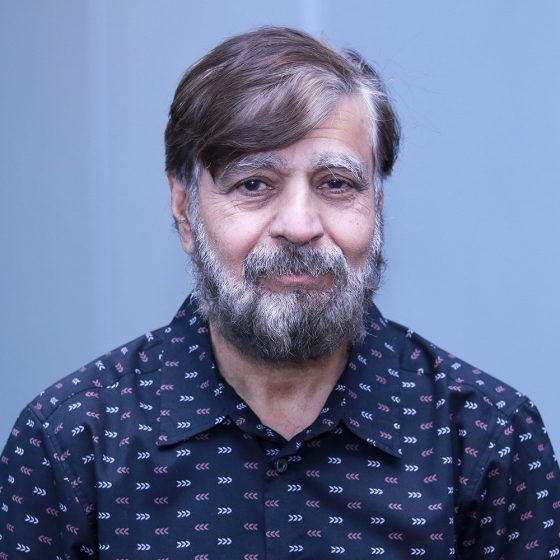
Professor, Brock University, Ontario, Canada
Divide, Shrink, and Conquer: Estimation Strategies for Large-Scale Data
Modern datasets are often too large, high-dimensional, and distributed to be conveniently stored and analyzed in a single location. This creates both computational and storage challenges and motivates statistical methods that can extract and combine information without requiring the full dataset to be centralized. In this talk, I present a divide-and-conquer approach to shrinkage estimation for sparse linear regression. The basic idea is simple: divide a large dataset into smaller subsets, perform estimation locally, and then combine the resulting information through a single round of communication. We develop pretest- and Stein-type shrinkage estimators that exploit sparsity while reducing estimation variability and substantially limiting the amount of information that needs to be stored or transferred. The theoretical properties of the proposed one-shot estimators are established, including consistency and asymptotic normality. Their finite-sample performance is investigated through extensive simulation studies and illustrated using the Million Song Year Prediction Dataset, a large-scale dataset containing audio features from one million contemporary songs. The application considers the challenging task of predicting the release year of a song from its acoustic characteristics, providing a natural setting for evaluating distributed estimation in a high-dimensional data environment. The talk demonstrates how divide-and-conquer and shrinkage can work together to address the statistical challenges created by modern large-scale data: divide the data, shrink intelligently, and conquer the estimation problem.
About the Speaker
Open this tab for some information about the speaker.
An update of this biosketch will be posted shortly.
Dr. Ejaz Ahmed is professor of Mathematics and Statistics in the Faculty of Mathematics and Science. Before joining Brock, he was a professor and head of Mathematics at the University of Windsor and University of Regina. Prior to that, he had a faculty position at the University of Western Ontario. Further, he is a Senior Advisor to Sigma Analytics (Data Mining & Research), Regina.
He is an internationally known scholar and an established researcher. Dr. Ahmed's research interests concentrate on big data, predictive modeling, data science, and statistical machine learning with applications in many walks of life. His research has been supported by a variety of grants from the Natural Sciences and Engineering Research Council (NSERC) of Canada since 1987, the Canadian Institute of Health Research, Ontario Centre for Excellence (OCE) and other sources throughout my academic career. Importantly, his NSERC grant was renewed in 2017 for another five years, with “Outstanding (O)” in all three categories. According to that year’s competition statistics, only two applications overall from ALL small universities received a ranking of “OOO” or higher.
Ari Zitin
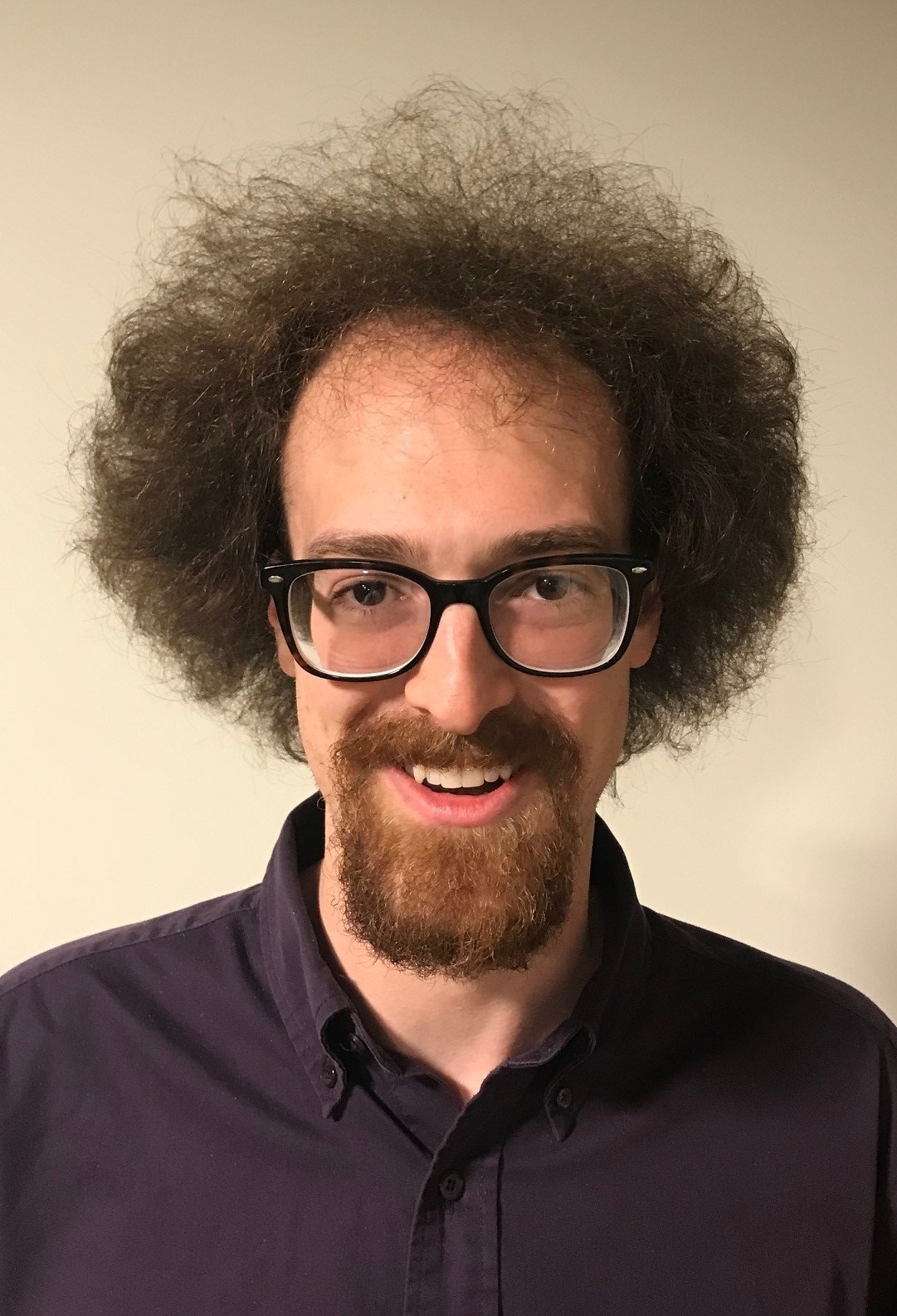
SAS Institute, North Carolina
From Insight to Impact: Agentic AI and the Decision Architecture of Trustworthy Action
As AI systems move from generating insights to executing decisions, the central challenge facing organizations is no longer model accuracy alone, but decision quality at scale.
When models act, inference becomes operational. This talk examines how the rise of agentic AI changes the role of statistics, shifting emphasis from insight generation to the design
of decision systems that are trustworthy, explainable, and accountable.
Building on recent domain-specific advances in areas such as clinical research and public health, the talk introduces decisioning as the missing architecture that connects statistical
rigor to real-world impact. Decisioning defines how model outputs are translated into actions through evidence, constraints, human oversight, and continuous validation.
Using illustrative examples across multiple industries, the keynote highlights where statisticians play a critical role as decision architects, shaping uncertainty thresholds,
escalation logic, auditability, and long-term monitoring.
The session reframes agentic AI as a decision-system problem rather than a modeling problem, and argues that the future impact of AI depends on how effectively statistical principles
are embedded into the systems that act on our behalf.
About the Speaker
Open this tab for some information about the speaker.
Ari Zitin holds bachelor’s degrees in both physics and mathematics from UNC-Chapel Hill. His research focused on collecting and analyzing low-energy physics data to better understand the neutrino. He taught introductory and advanced physics and scientific programming courses at UC-Berkeley while working on a master’s in physics with a focus on nonlinear dynamics. While at SAS, he has worked to develop courses on agentic AI, quantum computing, and optimization.
There are more details to come! Please check back for updates.
Sessions
We are currently organizing contributed and invited sessions covering a wide range of contemporary research areas. The invited session titles and organizers will be posted below as they are finalized.
- Innovations in Survival Analysis for Complex Biomedical Data
Organizer: Samiran Sinha, Texas A&M University, USA - Advances in Sampling Theory and Practice
Organizer: Sat Gupta, University of North Carolina Greensboro, USA - Statistical Methods and Applications for Time-to-Event, Longitudinal, and Complex Data
Organizer: Mithun Kumar Acharjee, University of Southern Mississippi, USA - Health Systems and Morbidity
Organizer: Md. Shahjahan, Daffodil International University, Bangladesh - Bayesian and Fiducial Inference
Organizer: Kalimuthu Krishnamoorthy, University of Louisiana at Lafayette - Recent Advances in Gini-Based Dependence Measures and Modern Classification Methods
Organizer: Yongli Sang, University of Louisiana at Lafayette - Statistical and Machine Learning Methods for Nonstandard Data Structures
Organizer: Mo Li, University of Louisiana at Lafayette - Object Data Analysis in the AI Era
Organizer: Vic Patrangenaru, Florida State University - Undergraduate Student Research
Organizer: Steven Miller, Williams University
More details about the sessions are coming soon, so please check back for updates.
Partners
Academic Partners
The Louisiana Chapter of the ASA
We are pleased to announce that the Louisiana Chapter of the ASA will participate in the conference. Please visit this web page to learn more about the Chapter. (This link opens in a new window.)
The University of Louisiana at Lafayette
We are pleased to acknowledge the support of the Office of Research, Innovation, and Economic Development at the University of Louisiana at Lafayette and the University itself for their support of the AISC 2026 and their commitment to support these conferences into the future. Please visit this web page to learn more about the University. (This link opens in a new window.)
Publication Partners
JSTP
We are pleased to announce that the Journal of Statistical Theory and Practice will publish a special issue devoted to papers presented at the conference. Please visit this web page to learn more about the Journal of Statistical Theory and Practice (opens in new window)
Springer
We are also please to announce our connection with the publisher of the Journal of Statistical Theory and Practice. Please visit this web page to learn more about the Springer and their many divisions. (opens in new window)